II still remember the first time I pulled a moka pot off the shelf at the cafe I worked at back in my late twenties. It was a beat-up Bialetti, stained with years of coffee, and honestly it made one of the best cups I had tasted in a long time. Something about that pressurized stovetop brew just hits different.
After spending over a decade behind the bar and even more years brewing at home, the moka pot is still one of my favourite tools in the kitchen. And one of the most underrated things about it is how little separates the cheap end from the expensive end price-wise.
Here is something worth saying upfront: moka pots do not have the wild price swings you see with espresso machines. You are not comparing a $50 machine to a $2000 one. The entire moka pot price range runs from about $30 at the low end to maybe $250 at the very top. That is a tight spread, and the honest truth is that even the budget picks on this list make excellent coffee. What you gain as you move up is mostly build quality, materials, and longevity rather than dramatically better coffee.
I have organized the six picks below into three clear tiers. Budget, mid-range, and premium. Two pots per tier, each chosen to be the best option at that level. If you’re new to this classic brewer, you may want to start with this beginner’s moka pot guide before choosing one.
All 6 Picks at a Glance
| Moka Pot | Best for | Material | Works On | Sizes | Typical Price |
| Grosche Milano | Budget beginners | Aluminium | Gas, Electric | 3 to 9 cups | $30–$65 |
| Bialetti Moka Express | Best overall | Aluminium | Gas, Electric | 1 to 12 cups | $35–$90 |
| Venus by Bialetti | Induction stoves | Stainless Steel | Gas, Electric, Induction | 2 to 6 cups | $50–$120 |
| Cuisinox Roma | Heavy-duty stainless | Stainless Steel | Gas, Electric, Induction | 4 to 10 cups | $100–$150 |
| De’Longhi Alicia EMK6 | Electric moka pot | Aluminum + Plastic | Electric only | 3 to 6 cups | $100–$170 |
| Alessi 9090 | Premium design | Stainless Steel | Gas, Electric, Induction | 1 to 10 cups | $220–$330 |
Why a Moka Pot Makes Sense
Before getting into the picks, it is worth laying out exactly why the moka pot is such a smart choice for most home brewers.
- Espresso-quality taste at a fraction of the cost. A proper espresso machine runs anywhere from a few hundred to several thousand dollars. A moka pot gives you that same bold, concentrated flavour profile for twenty-five to two hundred and fifty dollars total, and that includes the most premium option on this list.
- Perfect for small kitchens. The moka pot sits on your stove, stores in a cupboard, and takes up almost no counter space. If your kitchen is tight, this is one of the most space-efficient ways to brew quality coffee.
- No electricity needed for most models. Plug it in if you want the electric version, but the stovetop models run entirely on your hob. Great for travel, camping, or anywhere an espresso machine would be impractical.
- The price range is narrower than people expect. Unlike espresso machines where there is a massive gap between entry-level and professional equipment, moka pots sit in a tight band. The budget options are genuinely good. The premium options are mostly about longevity and materials rather than dramatically better coffee.
The one honest trade-off to know about before buying is cleaning. Compared to a drip machine or even a French press, a moka pot requires more hands-on maintenance. You need to unscrew the chamber, remove the filter basket, rinse every part individually, and let it all dry before reassembling. It is not a big deal once you get into the habit, but it is worth factoring in if you are someone who values a quick morning cleanup.
Quick Buying Guide
Aluminium vs Stainless Steel
Aluminium heats faster and many people feel it gives a slightly richer, more traditional flavour. The Bialetti Moka Express has used aluminium since 1933. Dry it thoroughly after washing to prevent oxidation over time.
Stainless steel is more durable, rust-resistant, and compatible with induction cooktops. If you have induction, stainless is your only option. It also requires less long-term maintenance.
Choosing the Right Size
Choosing the right moka pot size can be confusing for beginners because “cup sizes” on moka pots are smaller than standard coffee cups. In moka pot size guide page I explained exactly how to choose the right one.
- 1 to 3 cup: Best for one person or small concentrated servings.
- 4 to 6 cup: The sweet spot for most households, one or two people drinking normal-sized cups.
- 8 to 12 cup: Good for families or entertaining, though consistency gets harder at larger volumes.
Stove Compatibility
Gas and electric stoves work with almost every moka pot. Induction cooktops require a stainless steel model specifically built for induction. I have noted compatibility clearly under each pick below.
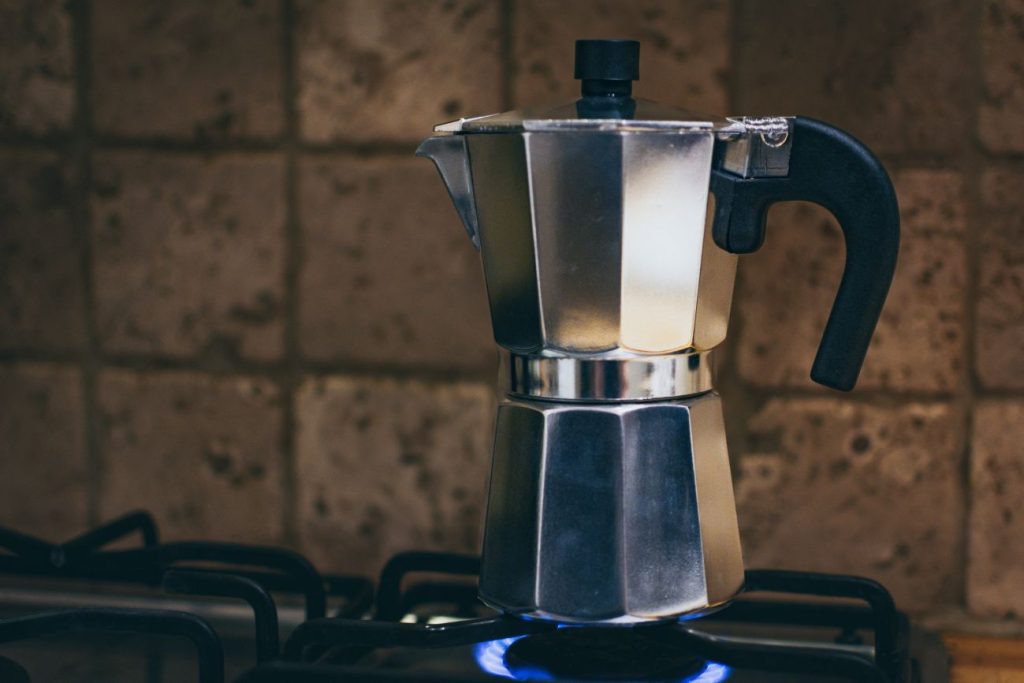
Budget Tier — $25 to $50
At this price level you are not making any real sacrifices on coffee quality. Both of these pots brew a genuinely excellent cup. What you are giving up compared to higher tiers is mostly long-term durability and induction compatibility. If you are on gas or electric and want to spend as little as possible for maximum flavour, either of these will serve you well for years.
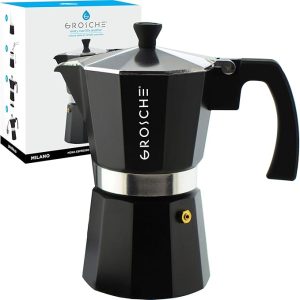
1. Grosche Milano — Best Budget Pick
- Price: $25 to $65 depending on size
- Stove compatibility: Gas and electric only
The Grosche Milano is where I send anyone who wants to try moka pot brewing for the first time without committing much money. At around twenty-five dollars for the smaller sizes it is the most affordable solid option on this list and it still makes a genuinely good cup.
The food-grade aluminium body is well put together for the price point. The silicone gasket and safety valve work as they should, and the soft-touch handle with burn guard is a thoughtful touch at this budget. It comes in a few colours too if that matters to your kitchen.
It will not outlast a Bialetti over the long run, and cleaning is the same hands-on process you get with any moka pot at any price. But if you want to learn the technique and see whether stovetop espresso is for you before spending more, this is the smartest entry point.
Best for: First-time moka pot users and anyone who wants to try stovetop brewing without spending much upfront.
2. Bialetti Moka Express — Best Overall Budget Pick
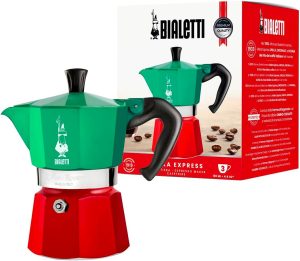
- Price: $30 to $80 for the most common sizes
- Stove compatibility: Gas, electric and propane camping stoves
This is the one that started it all. The Bialetti Moka Express has been around since 1933 and there is a reason it is still the most recognizable moka pot on the planet. I used one almost every day during my barista years when I wanted a quick cup before the morning rush, and I still reach for one at home now.
The octagonal aluminium body heats evenly, the safety valve is reliable, and the silicone gasket holds up well with regular use. It comes in sizes from a single cup all the way up to 12, which makes it versatile for almost any household setup.
What sets it apart at this price is consistency. As long as you use a medium-fine grind and keep the heat low and steady, this pot delivers brew after brew without fuss. The gaskets degrade over time but replacements are cheap and easy to find. Cleaning requires the usual moka pot routine of full disassembly and a careful rinse of every piece, but you will get used to it quickly.
Best for: Anyone who wants a dependable, authentic Italian stovetop experience. The classic choice at a price that is hard to argue with.
Mid-Range Tier — $35 to $90
Moving into mid-range gets you stainless steel construction, induction compatibility, and better long-term durability without crossing into luxury territory. The coffee quality is comparable to the budget tier because, as I mentioned, the price range in moka pots is tight. What you are paying for here is a pot that will genuinely last longer and work on any cooktop in your kitchen.
3. Venus by Bialetti — Best Entry Mid-Range
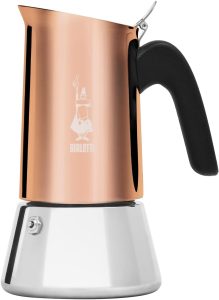
- Price: $55 to $140 for the most common sizes
- Stove compatibility: Gas, electric and induction
The Venus is Bialetti bringing their trusted brewing quality into stainless steel at an approachable price. It uses the same brewing mechanism as the Moka Express but in a stainless body that handles induction and holds up better over years of daily use.
The ergonomic handle stays cool during brewing, the mirror finish holds up well with regular cleaning, and the flip-top lid lets you monitor the brew without fully opening the pot. The coffee is bold and faithful to the moka pot tradition.
For anyone who needs induction compatibility but does not want to jump straight to the Cuisinox or Alessi price point, the Venus is a genuinely smart middle step. You get real Bialetti quality in stainless without paying much more than the aluminium original.
Best for: Buyers who want induction compatibility and stainless durability while keeping the budget reasonable.
4. Cuisinox Roma — Best Upper Mid-Range
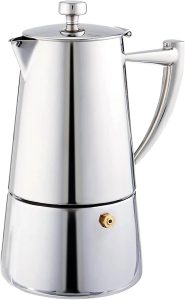
- Price: $55 to $140 for the most common sizes
- Stove compatibility: Gas, electric and induction
The Cuisinox Roma sits in a comfortable middle ground that does not get talked about enough. Surgical stainless steel construction, compatible with all stovetop types including induction, and well priced below the premium tier without cutting corners anywhere it matters.
The mirror-polished finish looks sharp and holds up with regular use. The wide base design genuinely helps with heat distribution on electric coil stoves where heat can be uneven, which is a practical advantage most people do not think about until they have had extraction problems. It does not retain flavours the way cheaper pots sometimes do, and cleanup is consistent with any other moka pot.
For someone who wants a meaningful step up from basic aluminium but is not ready to spend Alessi money, the Cuisinox Roma makes a quiet, convincing case for itself. It is the pot you buy and then stop thinking about because it works every morning without drama.
Best for: Mid-budget buyers who want stainless quality and induction compatibility without crossing into premium pricing.
Premium Tier — $80 to $250
At the premium end the gap between these two picks is wider than within the other tiers, and that is intentional. The De’Longhi earns its place here through electric convenience rather than raw materials cost. The Alessi earns it through craftsmanship and longevity. They are premium for different reasons and suit very different buyers.
5. De’Longhi Alicia EMK6 — Best Premium Electric Option
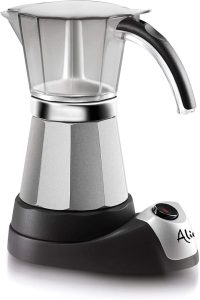
- Price: $80 to $100, 6-cup size only
- Stove compatibility: Electric only, no stovetop required
Not everyone wants to manage a stovetop in the morning. The De’Longhi EMK6 is the electric moka pot I recommend when people ask for something that handles the process for them. Fill it, press a button, and it takes care of the rest.
The auto shut-off means your coffee is not sitting there burning while you get dressed, and the transparent carafe lets you watch the brew develop. The detachable base makes it easy to bring straight to the table and pour without carrying the whole unit. The pressurized safety valve and cool-touch handle round out a well-considered design.
Cleaning is slightly different from a stovetop moka pot but still involves taking the unit apart and rinsing the components separately. The coffee it produces is rich and full-flavoured, much closer to true moka pot style than anything a drip machine produces.
Best for: People who love moka-style coffee but want electric convenience and no stove involvement.
6. Alessi 9090 — Best Premium Stovetop Splurge
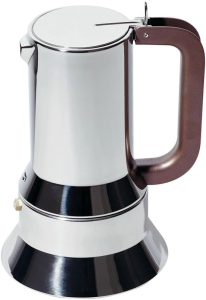
If you have spent any time in specialty coffee circles, you have probably come across the Alessi 9090. Designed by Richard Sapper, it has won design awards and has been part of the permanent collection at the Museum of Modern Art in New York. It looks like a piece of sculpture sitting on your stove.
Beyond the looks, it brews exceptionally well. The 18/10 stainless steel construction means it is induction compatible, rust-proof, and built to last decades. The truncated cone shape improves heat distribution and makes for a more even extraction. The lever lock mechanism lets you open and close the pot one-handed, which sounds like a small detail but you will appreciate it every single morning.
Here is the honest framing though: the coffee you brew in an Alessi 9090 is not dramatically different from what you get out of a thirty-dollar Bialetti. Both taste like bold, espresso-style coffee. Both require the same disassembly and careful rinse when you clean them. What the Alessi gives you is the experience of using something genuinely beautiful and well-made, every single day, for potentially the rest of your life. That is a real thing to value. It just depends on whether it matters to you.
Best for: Coffee lovers who value exceptional craftsmanship and longevity and want a moka pot they will never need to replace.
How Moka Pots Compare to Other Brewing Methods
People ask me regularly whether they should get a moka pot or just invest in an espresso machine. Here is an honest side-by-side after years of using all of these methods professionally and at home.
| Brewing Method | Flavor | Convenience | Cleaning | Cost |
|---|---|---|---|---|
| Moka Pot | Bold, espresso-style | Simple stovetop | Moderate, disassembly required | $25 to $250 |
| Espresso Machine | Concentrated with crema | Requires skill | Complex, regular descaling | $300 to $2,000+ |
| French Press | Full-bodied, heavy | Manual, straightforward | Easy, quick rinse | $20 to $100 |
| Pour-Over | Clean and nuanced | Requires patience | Easy, just the vessel | $15 to $60 |
| Drip Machine | Mild, everyday | Push and walk away | Very easy | $30 to $200 |
The moka pot sits in a genuinely unique position on that table. It is the only method that gives you espresso-level flavour at a price that starts under $30 dollars and fits in a kitchen drawer. Some coffee drinkers prefer the French press because it produces a smoother and less concentrated cup. If you’re unsure which brewing method suits you best, see our comparison of French press vs moka pot.
Final Thoughts
After years of brewing professionally and at home, the moka pot remains one of my favourite tools in a kitchen. There is something satisfying about the ritual of it. Filling the chamber, waiting for that gurgle, pouring a dark concentrated cup that smells like a proper cafe. It sounds simple because it is, and that is the whole point.
Here is the short version if you are still deciding which tier makes sense for you:
- Budget tier: Start with the Bialetti Moka Express. It is the original for a reason. If you are brand new and cautious about the investment, the Grosche Milano is a solid entry point at even less money.
- Mid-range tier: The Venus by Bialetti if you want induction and value. The Cuisinox Roma if you want something a step more refined that will last a long time.
- Premium tier: The De’Longhi EMK6 if convenience is what you are paying for. The Alessi 9090 if you want a lifetime piece of kitchen equipment that also happens to be beautiful.
Whatever you pick, use a medium-fine grind, keep the heat low and steady, never tamp the grounds down, and always dry the pot thoroughly after cleaning. Do those things and you will be making excellent coffee at home every single morning.
FAQs for Best Moka Pots
Is a moka pot really like an espresso machine?
It is close but not technically identical. A moka pot uses steam pressure to push water through coffee grounds, producing a strong, concentrated brew with a very similar flavour profile to espresso. The main difference is that a real espresso machine uses much higher pressure, which creates the crema layer on top. Moka pot coffee does not have crema but it has that same bold, rich character. For home brewing it gets you about ninety percent of the espresso experience at a fraction of the cost and without any of the machine complexity.
Why are moka pot prices so close together compared to espresso machines?
Because the technology is simple and the materials are affordable. A moka pot is essentially a metal chamber with a valve and a filter basket. There is no pump, no boiler, no electronics in the stovetop versions. The premium end costs more because of higher-grade materials, better engineering tolerances, and design quality, but there is no complex machinery to justify a thousand-dollar price tag. The entire range from budget to premium sits between about twenty-five and two hundred and fifty dollars, which is remarkably tight.
How hard is it to clean a moka pot?
Harder than most other home brewing methods, which is worth knowing before you buy. You need to unscrew the top and bottom chambers, remove the filter basket and funnel, and rinse every piece individually with warm water. Avoid soap if you can because residue affects the flavour. You also need to dry everything thoroughly before reassembling, especially with aluminium pots where moisture causes oxidation. It takes maybe five minutes once you know what you are doing, but it is more hands-on than rinsing a French press or tossing a paper filter.
Can I use a moka pot on an induction stove?
Only stainless steel models designed for induction will work on an induction cooktop. The aluminium pots, including the classic Bialetti Moka Express, are not magnetic and will not heat on induction. From this list the Venus by Bialetti, Cuisinox Roma, and Alessi 9090 are all induction compatible.
What grind size should I use?
Medium-fine is the target, a step coarser than you would grind for espresso. Espresso grind is often too fine for a moka pot and causes clogging or over-extraction and bitterness. Aim for something between the texture of table salt and fine sand. If your coffee is coming out bitter, try going a little coarser first before adjusting anything else. Read this for more details – Moka Pot Sizes Explained
How do I know when it is done brewing?
You will hear it change. The steady bubbling sound will shift to a sputtering hiss, which means the water in the bottom chamber is running low. Take it off the heat at that point and run the base under cold water to stop the extraction immediately. Leaving it on heat past this point overcooks the coffee and that is where the burnt, bitter taste comes from.
Learn More About Moka Pot Brewing
If you’re exploring moka pot coffee further, these guides may help: