There was a stretch of time when my entire coffee setup fit into a backpack.
A small dripper, a folded filter, a scale I trusted, and a hand grinder that had already seen too many airport security trays. I was moving between Airbnbs, sometimes cooking in kitchens barely bigger than a hallway. What mattered wasn’t having the best gear on paper, but having tools that worked quietly, consistently, and didn’t demand space I didn’t have.
Manual grinders make sense in these situations, but not all of them make sense for everyone.
This guide is for intermediate and experienced home brewers who already understand why grinding fresh matters. You might be traveling more. You might be downsizing. Or you might just be tired of electric grinders that feel oversized for how you actually brew coffee.
Below are the manual grinders I’d realistically recommend going into 2026, with context on who they’re right for, and who should keep looking.
Why Manual Grinders Still Make Sense in 2026
In a full kitchen, electric grinders are convenient. In a small kitchen or while traveling, they often become a problem.
Manual grinders avoid several common issues at once.
They take up very little counter space. Most fit into a drawer or cupboard, and many slide easily into a bag. There is no need to worry about voltage, adapters, or outlet placement. And when you grind early in the morning, you do not wake everyone else in the room.
From a coffee standpoint, manual grinders are also surprisingly capable. Many use high-quality burrs that produce a consistent grind for pour-over, AeroPress, French press, and even entry-level espresso.
What you trade is speed. Grinding by hand takes effort, especially for espresso. Whether that trade-off is acceptable depends on your routine. For many people brewing one or two cups a day, it is still an easy yes.
What actually matters in a manual grinder
Before looking at specific models, it helps to be clear about what makes a hand grinder worth owning.
Burr quality and alignment
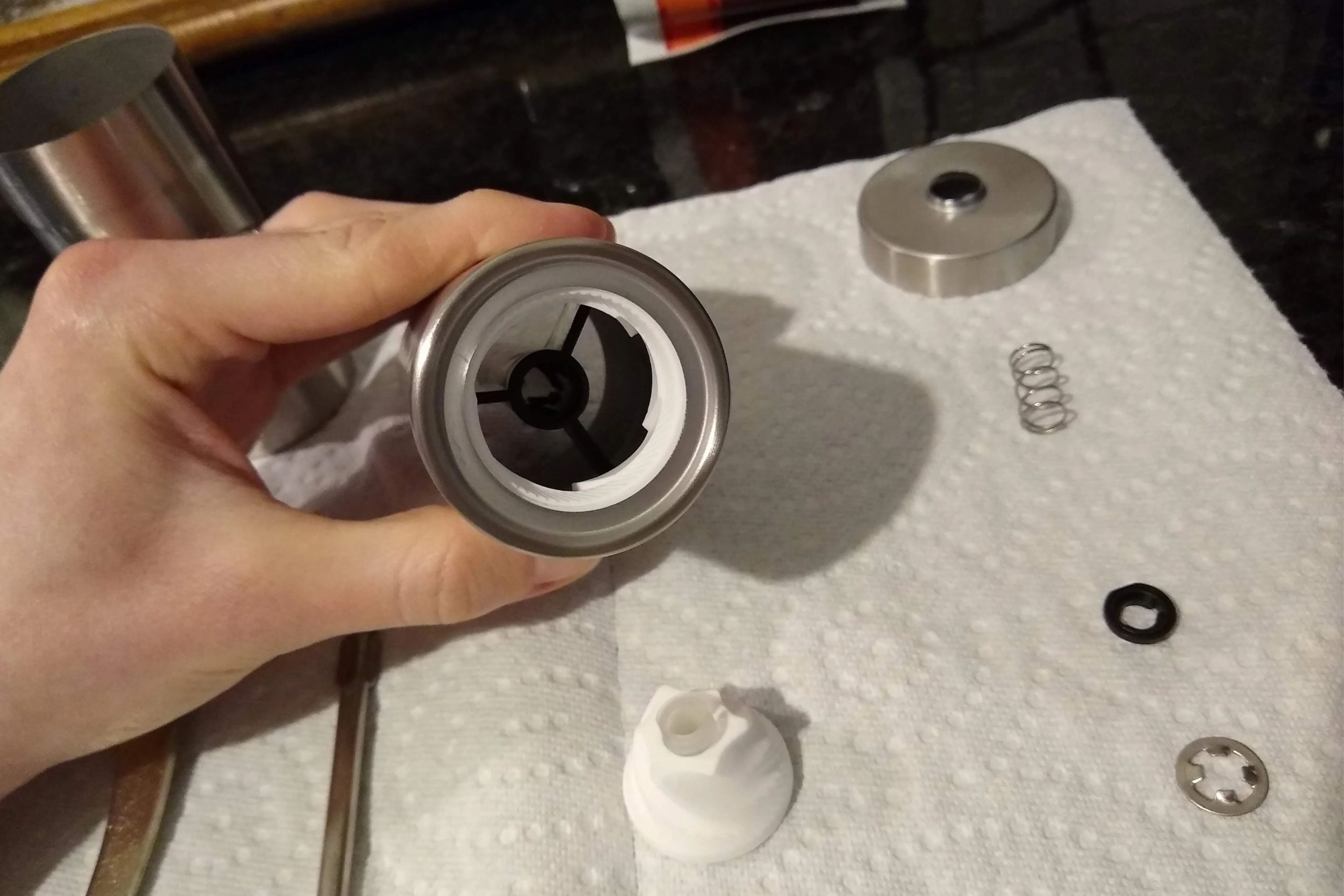
The burrs do most of the work. Steel burrs tend to stay sharp longer and offer more consistency. Ceramic burrs can work fine for coarse brewing but usually struggle with finer adjustments.
Equally important is alignment. A well-aligned burr set produces fewer fines and a more even grind, which shows up directly in the cup.
Adjustment system
Some grinders adjust from the top, others from the bottom. Top-adjust systems are easier to change on the fly and less likely to shift accidentally while grinding.
Clear, repeatable clicks matter more than the total number of settings.
Size and capacity
For travel, smaller is usually better. Most compact grinders hold 20–25 grams of coffee, which is enough for one large cup or two smaller ones. Larger capacities add bulk without much benefit.
Build and longevity
A grinder you travel with will get knocked around. Solid bearings, metal bodies, and simple designs tend to hold up better over time.
Best manual coffee grinders to buy in 2026
1. 1Zpresso K-Ultra Manual Grinder
Best all-around choice for serious home brewers
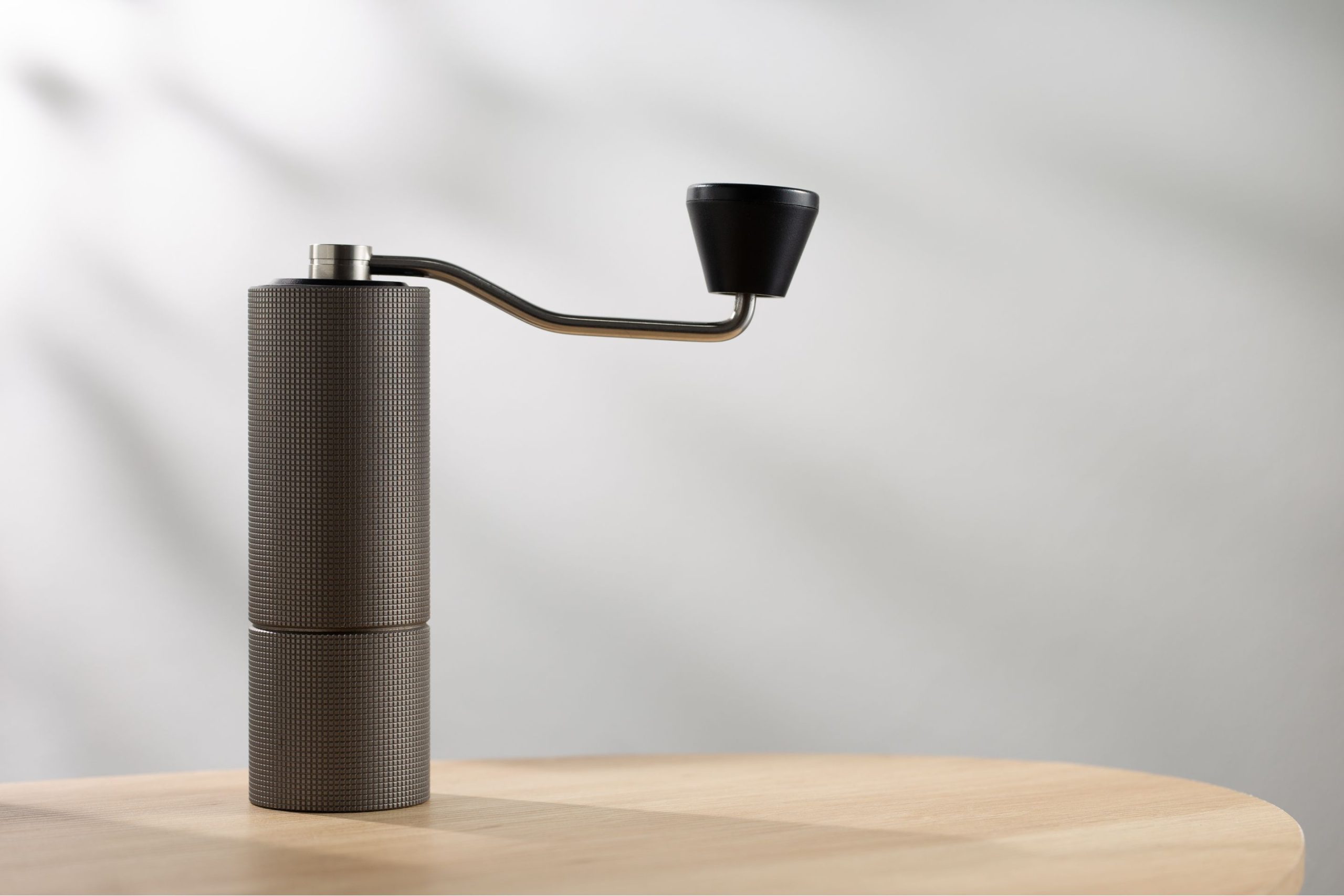
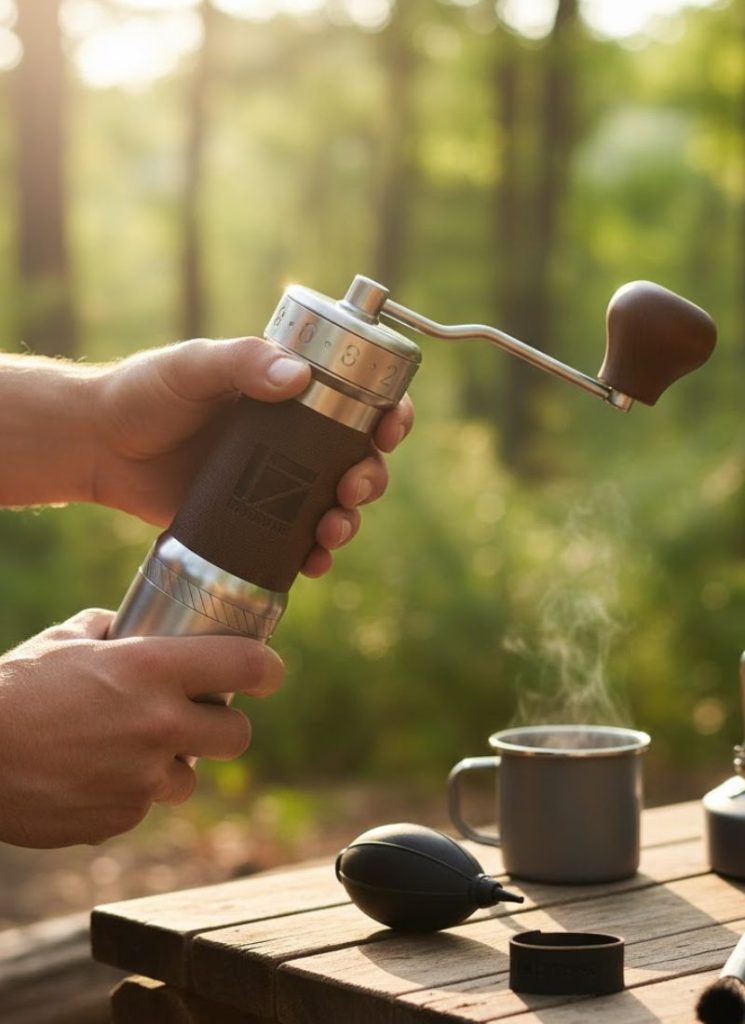
The K-Ultra feels like the most complete manual grinder for people who brew multiple methods and want repeatable results.
I’ve found its external adjustment ring especially helpful when moving between pour-over and immersion. You don’t have to count clicks or guess where you were yesterday.
Why it works well
- Large, well-aligned burrs with consistent grind distribution
- External adjustment with clear numbering
- Solid build without feeling overbuilt
- Comfortable handle and smooth rotation
Best for: Brewers who want one manual grinder to cover pour-over, AeroPress, and occasional espresso-adjacent brewing.
Not ideal for: Anyone trying to minimize weight above all else. It’s portable, but not ultralight.
If espresso is what you brew most, the J-Ultra makes more sense. Its finer adjustment range gives you better control when dialing in espresso, without feeling like overkill for that specific use.
2. TIMEMORE Chestnut C3S Pro
Best value grinder for travel and daily use
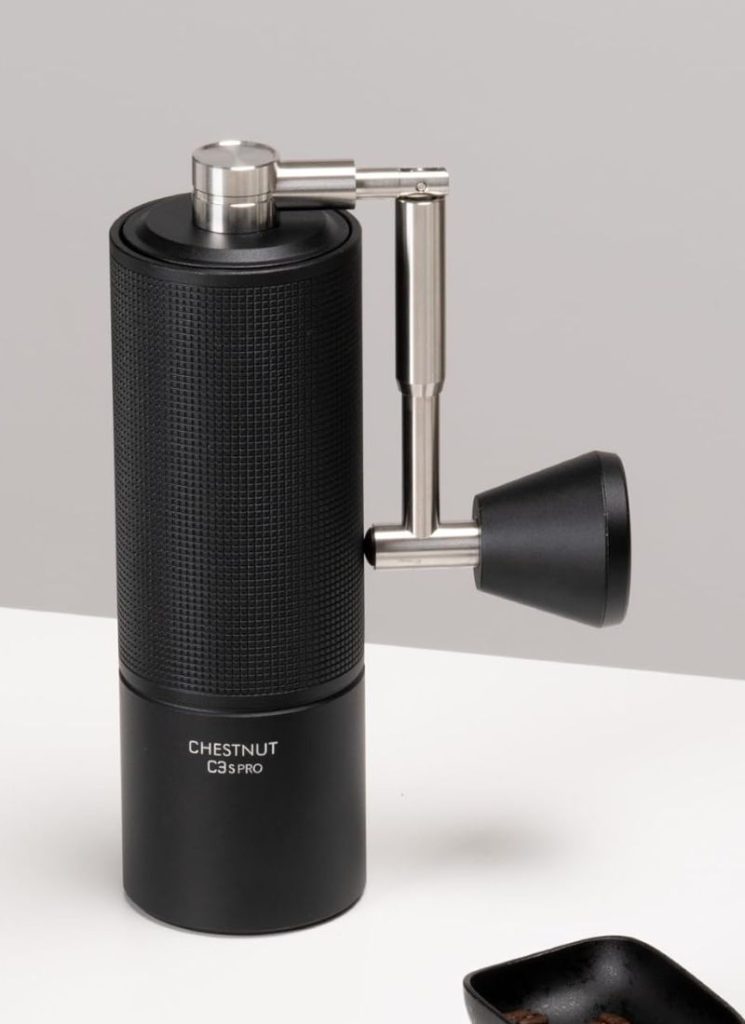
The C3S Pro is proof that you don’t need to spend top-tier money to get respectable grind quality.
It’s compact, light, and easy to live with. For travel, this is often the grinder I recommend first because it doesn’t demand much adjustment time or learning.
Why it works well
- Consistent burrs for filter brewing
- Compact size fits easily into luggage
- Smooth grinding feel for its class
- Good balance of performance and price
Best for: Frequent travelers and small-kitchen brewers focused on pour-over and AeroPress.
Not ideal for: Those dialing in espresso regularly or chasing ultra-fine grind precision.
3. Comandante C40
Best grind quality for filter coffee purists
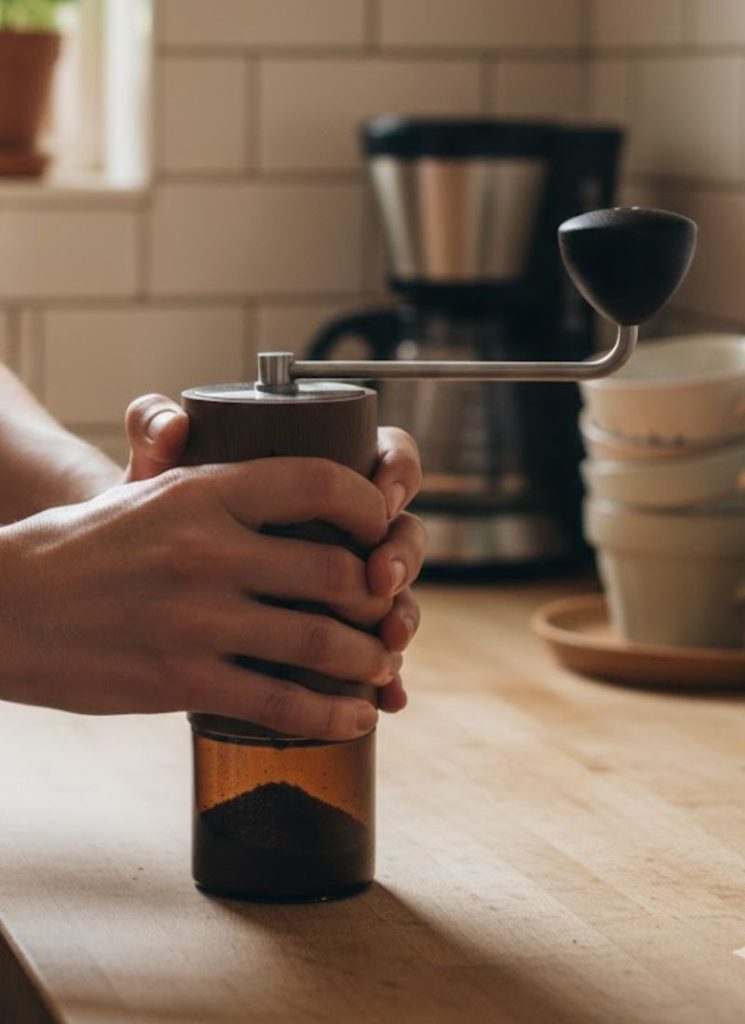
The Comandante has been around long enough to earn its reputation honestly.
What stands out is clarity in the cup. For filter brewing, especially lighter roasts, the grind profile feels clean and predictable.
Why it works well
- Excellent grind uniformity for filter coffee
- Simple, durable construction
- Long-term parts availability
- Well-documented community settings
Best for: Pour-over and immersion brewers who value taste clarity over convenience.
Not ideal for: People who frequently change grind sizes or want external adjustments without accessories.
4. Kinu M47 Phoenix
Best for durability and occasional espresso
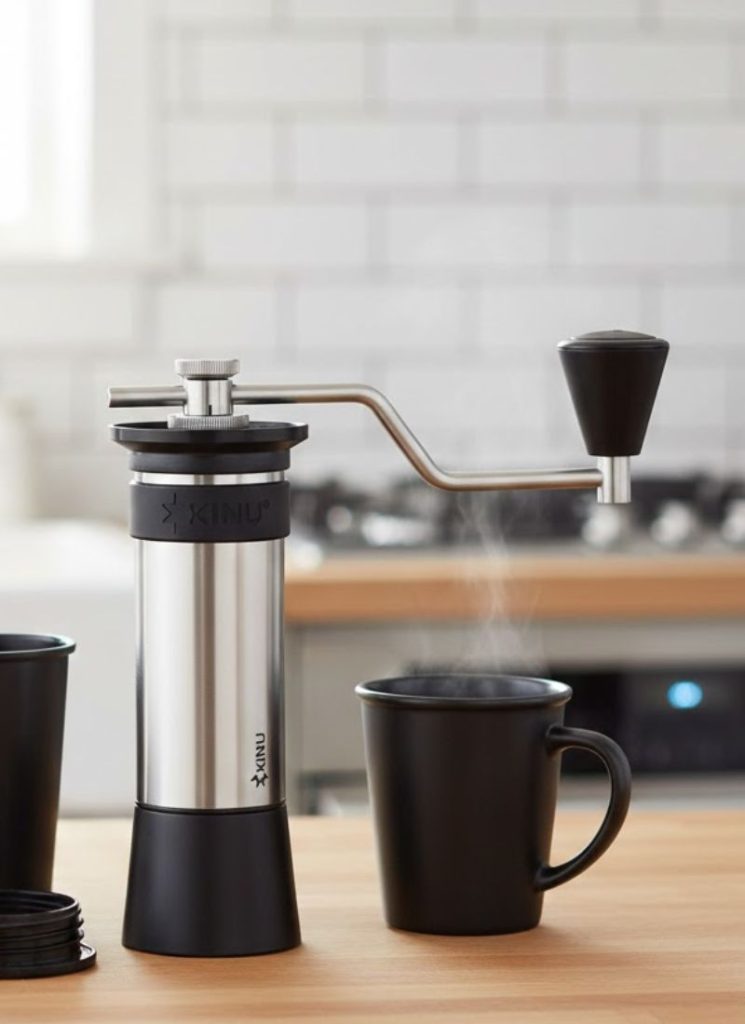
The Phoenix version trims weight compared to other Kinu models while keeping the same burr geometry.
It feels robust without being excessive. If you occasionally brew espresso while traveling, this is one of the few manual grinders that handles it without frustration.
Why it works well
- Very stable burr alignment
- Stepless adjustment system
- Comfortable grip even during fine grinding
- Long-term durability
Best for: Brewers who want espresso capability in a manual format without carrying a full-metal grinder.
Not ideal for: Ultralight packers or those who prefer click-based adjustments.
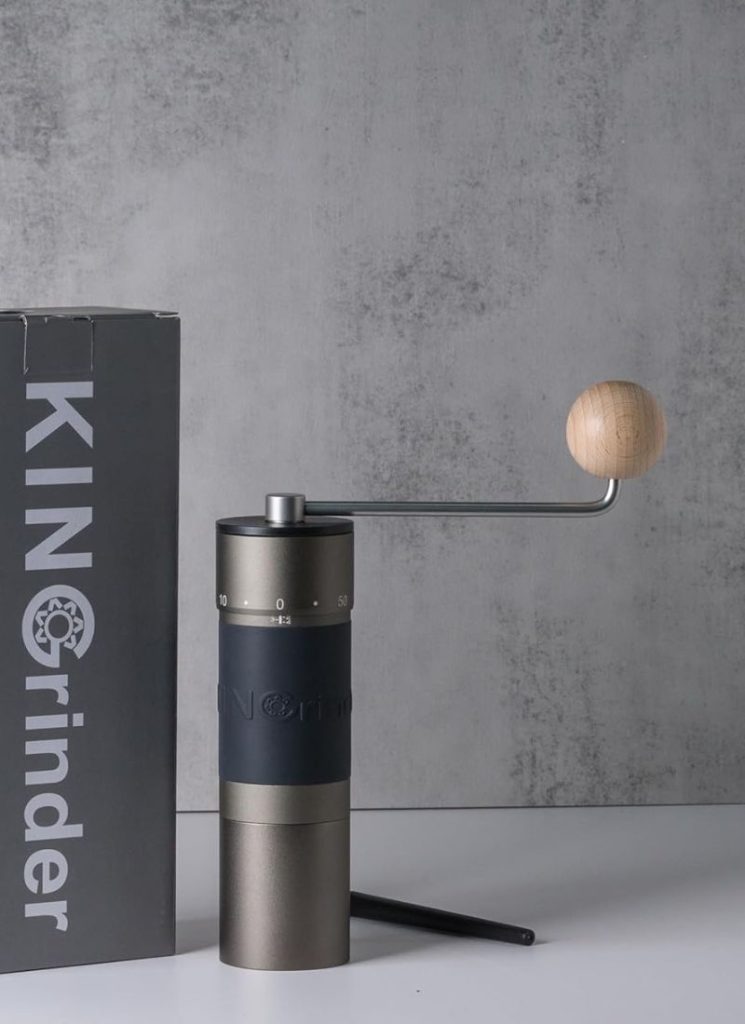
5. KINGrinder K6
Best budget-friendly option with external adjustment
The K6 is interesting because it offers features usually found in more expensive grinders.
External adjustment and solid burr performance make it approachable for intermediate users who want control without overthinking things.
Why it works well
- External adjustment dial
- Good grind consistency for filter and AeroPress
- Comfortable handle and decent speed
- Competitive price point
Best for: Brewers upgrading from entry-level hand grinders who want clearer adjustments.
Not ideal for: Those expecting premium finishing or ultra-refined grind feel.
One extra: Porlex Mini II
The Porlex Mini II has been around for a long time, and that is part of its appeal. It is compact, lightweight, and made in Japan with a simple, proven design. The ceramic burrs are durable, though they do not offer the same clarity as modern steel burrs. For travel and basic brewing, however, it remains dependable. It fits neatly inside many AeroPress plungers, which makes it easy to pack as a single unit.
How to Choose Between These Grinders
If you brew mostly pour-over and immersion, grind quality and adjustment clarity matter more than espresso capability. That narrows the field quickly.
If you brew multiple methods, especially while traveling, external adjustment becomes more valuable than most people expect.
If you’re chasing espresso by hand, be honest about how often you’ll do it. Fine grinding takes time, even with excellent grinders.
There’s no perfect choice. Just better alignment with how you actually brew.
Manual grinders for small kitchens vs travel use
The same grinder can work in both contexts, but priorities shift slightly.
In small kitchens, stability and comfort matter more. You’re grinding daily, sometimes half-awake. A smoother handle rotation and solid grip reduce friction over time.
For travel, size and weight rise to the top. You might accept slower grinding if it means everything fits neatly into a bag.
There’s no universal “best” choice here, only better matches for how you actually brew.
When You Don’t Need a Premium Manual Grinder
Not everyone benefits from stepping up to high-end manual grinders.
If you:
- Brew only one method
- Don’t adjust grind size often
- Prioritize speed above all else
A simpler grinder may serve you just fine.
Consistency matters more than complexity.
When a manual grinder might not be the right move
Manual grinders are excellent, but they’re not for everyone.
You might want to skip them if:
- You regularly brew for multiple people
- Hand or wrist fatigue is a concern
- You want push-button convenience every morning
In those cases, a compact electric grinder often makes more sense, even in small kitchens.
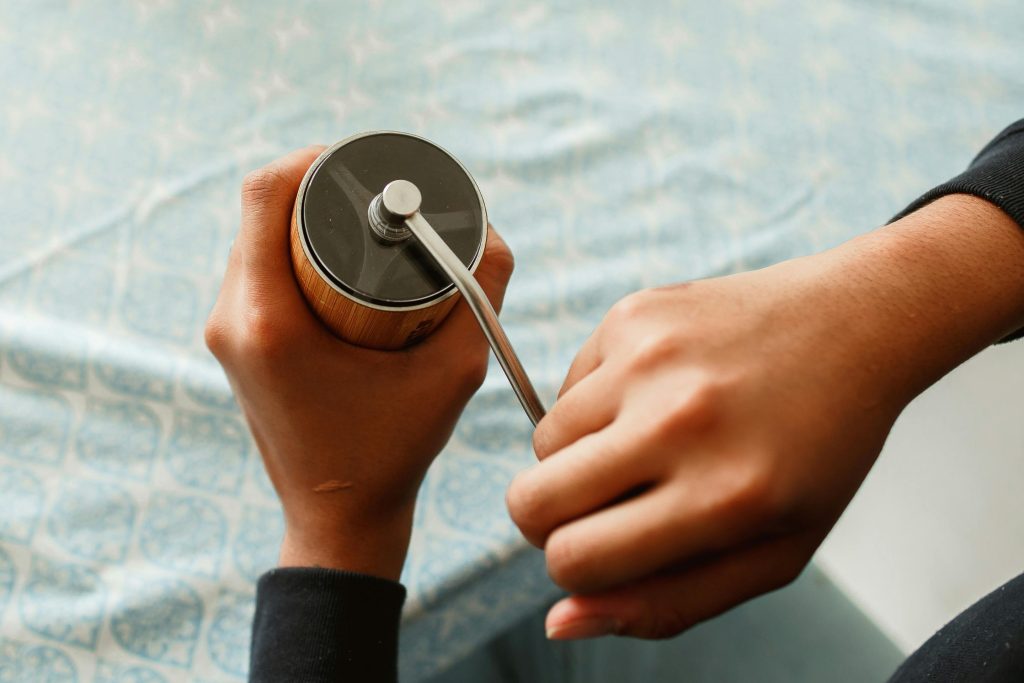
Making a small setup work better
A good grinder is only one part of the picture.
If you are building a compact or travel-friendly setup, pairing a manual grinder with a simple brewer makes everything easier. The Learn section covers minimalist and travel-friendly coffee setups in more detail, including what to upgrade first and what to skip.
Final thoughts
Manual grinders aren’t about nostalgia or saving money anymore. They’re about control, quiet, and fitting coffee into real life without letting gear take over your space.
If you already understand extraction and grind size, a good hand grinder can be a long-term companion rather than a stepping stone.
Choose one that matches how and where you brew, not the one with the loudest praise.
If you want to explore how these fit into a broader setup, the Coffee Grinders Guide links everything together, from beginner options to more advanced choices.