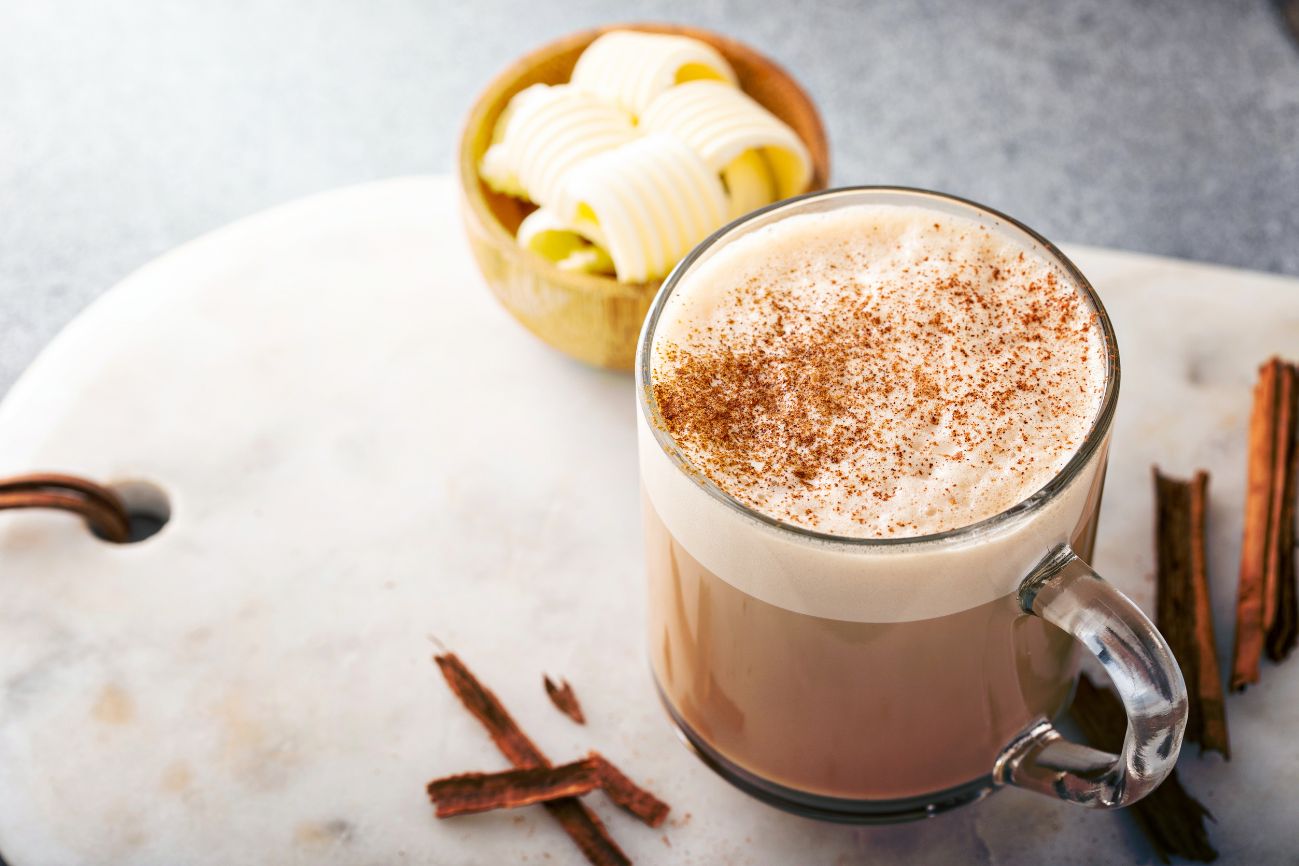
The first time I tried butter coffee, I wasn’t thinking about energy, focus, or performance.
I was curious about texture.
Coffee with fat behaves differently in the cup. The aroma softens. The mouthfeel changes. Sometimes it feels richer and rounder. Other times it feels strangely muted. Over the years, I kept noticing how people either swear by butter coffee or reject it completely, with very little middle ground.
I wanted to understand why.
This guide isn’t about promises or shortcuts. It’s a practical look at butter coffee – often called Bulletproof-style coffee—from a home brewer’s point of view. What it actually is, how to make it properly, and who tends to enjoy it (and who usually doesn’t).
If you’re still learning how brewing choices affect taste and texture, it helps to understand the basics first.
What Is Butter Coffee, Really?
Butter coffee is simply brewed coffee blended with fat – usually unsalted butter, sometimes combined with oil. That’s it.
It’s not a new brewing method, and it’s not a replacement for coffee beans, grind quality, or basic technique. It’s just coffee with added fat, emulsified so it becomes smooth instead of oily.
The confusion comes from how it’s talked about. In many places, butter coffee is framed as a lifestyle solution. In practice, it’s closer to a texture experiment.
Compared to coffee with milk or cream, butter coffee:
- has no sweetness
- feels heavier on the tongue
- carries aroma differently
- can taste flatter if made carelessly
If you enjoy black coffee for its clarity, this will feel like a departure. If you like fuller, rounder cups, it might make sense occasionally.
For a broader picture of how different coffee styles affect body and flavour, this is useful background reading: Coffee Brewing Methods Guide
How Butter Changes Coffee Taste and Mouthfeel
Fat does two main things in coffee.
First, it adds weight. The cup feels thicker, almost like a thin soup instead of a drink. Some people find this comforting. Others find it distracting.
Second, fat softens sharp edges. Acidity feels muted. Bitterness feels rounder. Aromatics don’t jump out as much.
This is why bean choice matters more than people expect. A bright, lightly roasted coffee often loses its character under butter. Medium roasts tend to work better. Very dark roasts can feel heavy and dull.
If the coffee underneath isn’t already pleasant, butter won’t fix it. It just hides problems.
If bitterness or flatness is already an issue for you, it’s worth understanding why coffee tastes bitter before adding anything to the cup.
A Simple Butter Coffee Recipe (For Reference)
YButter coffee became widely known through Dave Asprey, who popularised it under the name Bulletproof Coffee.
Here’s the original recipe, included for context—not as a requirement.
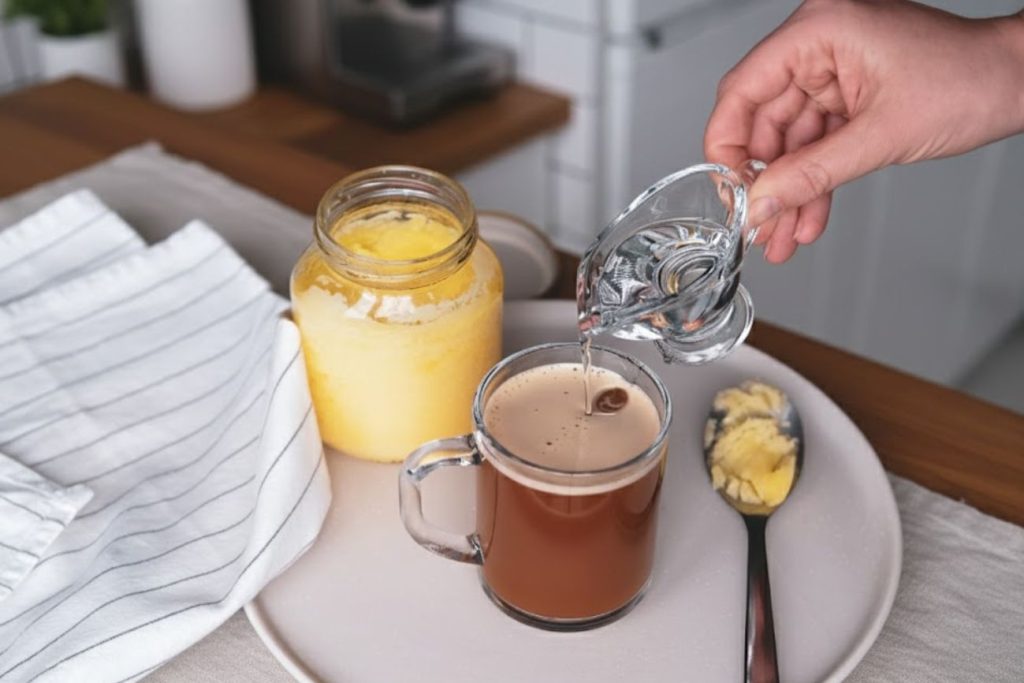
Dave Asprey’s Bulletproof Coffee
- 1 cup freshly brewed coffee
- 1–2 tablespoons grass-fed unsalted butter
- 1–2 tablespoons MCT oil
Everything is blended until fully emulsified.
This version is much heavier than what most home brewers enjoy. If you try it, consider starting with significantly smaller amounts, especially of the oil.
For Asprey’s own explanation and background, see the original source: Bulletproof.com
The Original Bulletproof Recipe (For Context)
The version most people associate with “Bulletproof Coffee” was popularised by Dave Asprey.
His original recipe typically includes:
- freshly brewed coffee
- grass-fed unsalted butter
- MCT oil (a concentrated fat derived from coconut oil)
The idea was to create a rich, filling coffee that could replace breakfast for people following low-carb or fasting routines.
Whether that makes sense for you depends less on the recipe itself and more on how you eat, how you respond to fat, and what you actually enjoy drinking in the morning.
Why Some People Choose Coffee With Butter or Oil
Mixing butter and oil into coffee sounds odd at first. For some people, it fits a specific routine—usually low-carb eating or intermittent fasting.
A few commonly reported reasons:
- It feels steady
Fat slows things down. Some people prefer that to a sharp caffeine hit. - It keeps hunger away
Especially for those skipping breakfast. - It simplifies mornings
One drink instead of a meal.
I don’t treat these as guarantees. They’re just patterns I’ve noticed over time.
If fasting or nutrition is your main interest, it’s worth reading specialised sources rather than relying on coffee sites alone.
The Science Behind It
Let’s look at what the research says about the main components of Bulletproof Coffee:
Coffee
- Contains caffeine, which boosts alertness and metabolism.
- Loaded with antioxidants that may reduce inflammation and protect cells.
- May support fat-burning and improve exercise performance.
MCT Oil
- MCTs (especially C8 and C10 types) are easily absorbed and turned into ketones.
- Studies show they can support weight loss by increasing satiety and fat oxidation.
- May improve cognitive function, especially in people on a low-carb or ketogenic diet.
Grass-Fed Butter
- High in vitamins A, D, E, and K2.
- Contains butyrate, a short-chain fatty acid that supports gut health and reduces inflammation.
- Packed with healthy saturated fats that keep you full and help hormone production.
So while Bulletproof Coffee might sound indulgent, the ingredients are grounded in nutritional science, especially if you’re avoiding carbs or managing hunger while fasting.
Variations People Actually Use at Home
Not everyone uses butter, and that’s fine.
Some people prefer:
- ghee for a cleaner flavour
- a small amount of neutral oil for lighter texture
- a mix of butter and milk for something closer to a flat white
- a pinch of salt or cinnamon for balance
None of these are essential. They’re just ways people adjust mouthfeel to suit their taste.
If you’re already happy with coffee and milk, there’s no reason to force this.
Who Usually Enjoys Butter Coffee
From what I’ve seen, butter coffee tends to work for:
- people who already drink coffee without sugar
- those who prefer low-acidity cups
- anyone curious about texture and mouthfeel
- minimal breakfast drinkers who want something filling
It’s often treated as a routine, but it doesn’t have to be. Many people enjoy it occasionally and then move on.
Who Usually Doesn’t (and That’s Normal)
Butter coffee is often disliked by:
- people who enjoy bright, aromatic coffee
- anyone sensitive to heavy mouthfeel
- those expecting sweetness or dessert-like flavor
- people who prefer clarity over richness
Disliking it doesn’t mean you did anything wrong. It usually just means your preferences lean elsewhere.
If flavour clarity matters to you, brewing method choice will have a bigger impact than add-ins.
Common Mistakes That Make It Taste Bad
Most bad butter coffee comes from a few avoidable issues.
- Using poor coffee (If you use instant coffee, use barista version or premium quality)
Fat amplifies texture, not quality. - Adding too much butter
Start small. Always. - Not emulsifying properly
Oil floating on top is unpleasant. - Using coffee that’s too light or too dark
Medium roasts are the safest place to start. - Expecting it to taste like milk coffee
It won’t.
Is Butter Coffee Something You Need?
For most people, no.
It’s not a requirement for good coffee. It won’t replace learning how to brew well. It won’t fix stale beans or uneven grinding.
Butter coffee is simply one way people change how coffee feels in the cup. If that sounds interesting, it’s worth trying once or twice. If it doesn’t, there’s nothing missing from your routine.
Good coffee should fit real life. Not every experiment needs to become a habit.
If You’re Curious, Where to Go Next
If butter coffee made you think more about how coffee texture works, these are worth exploring next:
- how grind size affects body
- how brew methods change mouthfeel
- why some coffees feel thin and others feel round
Those fundamentals matter far more than what you add to the cup.
Final Thoughts
I don’t drink butter coffee regularly. I’ve made it in small kitchens, in borrowed apartments, and out of curiosity more than necessity.
Sometimes it works. Sometimes it doesn’t. And that’s fine.
Coffee doesn’t need to be optimized to be enjoyable. It just needs to make sense for how you live and what you like.
That’s usually enough.