Most coffee debates aren’t really about flavor. They’re about defending purchases.
Someone buys an expensive espresso machine and needs proof it was worth it. Someone discovers the moka pot and decides it’s the hidden shortcut cafes don’t want you to know about. Both camps are wrong, and neither is giving you a straight answer.
I’ve been making coffee for fifteen years at cafes, Airbnbs, short-term apartments, hotel rooms. I’ve pulled shots on commercial machines worth more than a used car and made moka pot coffee on a two-burner gas stove in a Lisbon apartment at 7am. I have opinions.
Here’s the one thing that matters most: moka pot coffee and espresso are not the same drink. Once you stop forcing that comparison, choosing between them becomes simple.
First, Let’s Kill the Biggest Myth
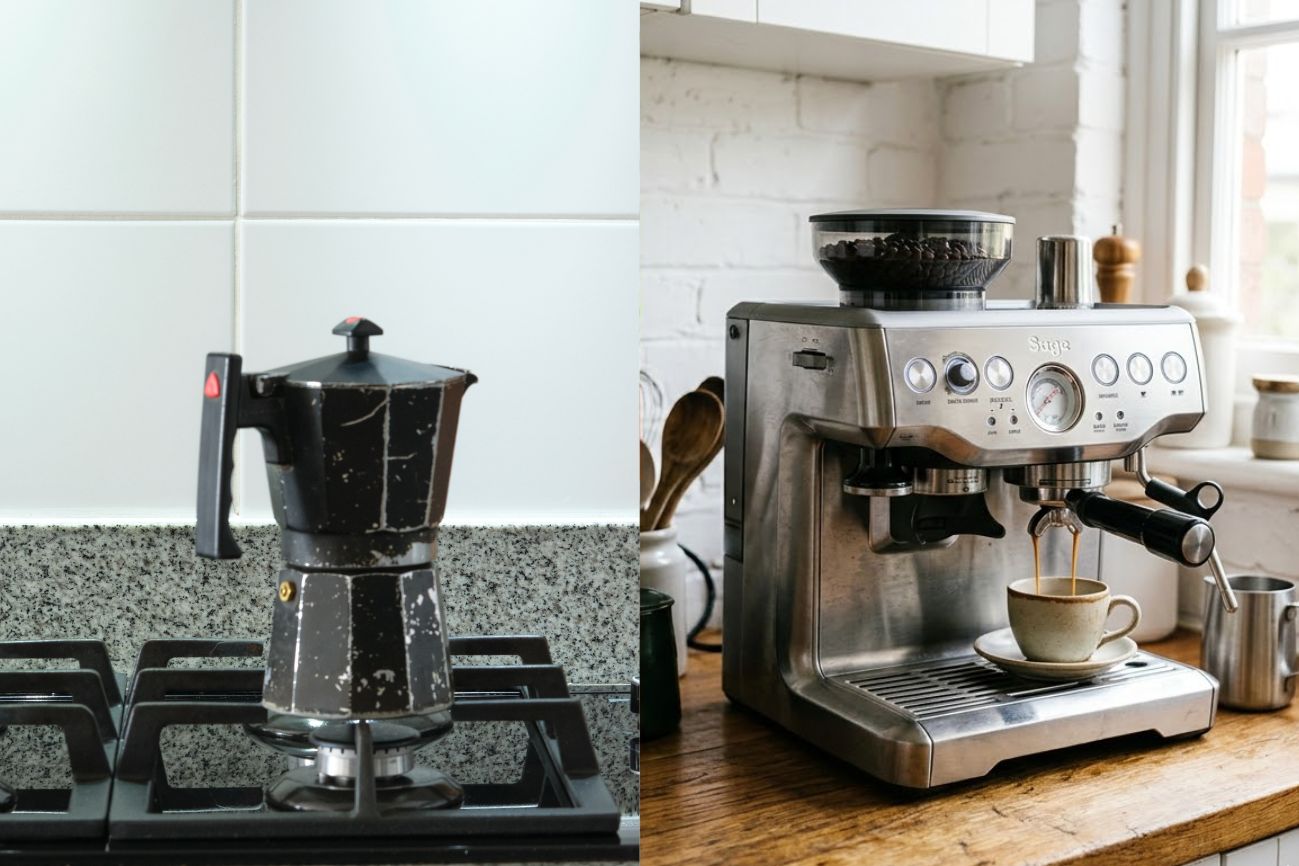
A moka pot does not make espresso. I know the box says ‘stovetop espresso.’ I know Italians have been brewing it for nearly a century. Doesn’t matter.
The science is clear. A proper espresso machine pushes water through finely ground coffee at 9 bars of pressure. That pressure is what creates the dense, syrupy body and the crema that reddish-brown foam sitting on top of a well-pulled shot.
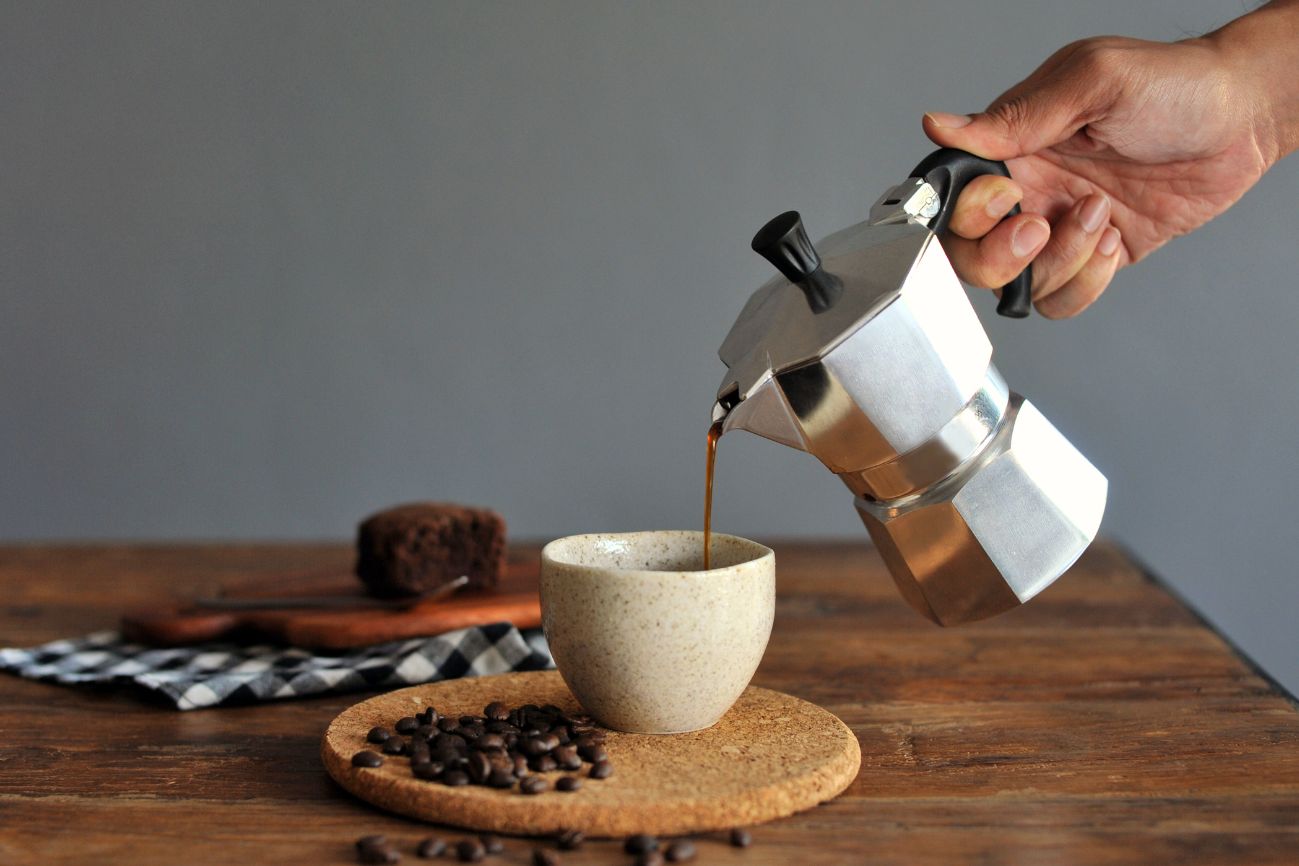
A moka pot works at 1 to 2 bars. Water heats in the sealed bottom chamber, steam pressure builds, and that pressure pushes hot water upward through the grounds into the top chamber. It’s elegant. It’s simple. But it’s not espresso extraction, but it’s steam-assisted percolation.
Think of it this way:
- Espresso = pressure-driven extraction at 9 bars, very fast
- Moka pot = steam-assisted percolation at 1-2 bars, slower
Two different tools. Two different results. Both worth having, but just not interchangeable.
The practical point: if you want real espresso with crema and syrupy texture, you need an espresso machine. The moka pot makes something excellent, but it’s its own thing.
Why Pressure Changes Everything in the Cup
This is where it gets technical, and it’s worth understanding because it explains every flavor difference you’ll notice.
When an espresso machine forces water through coffee at 9 bars, it extracts oils and dissolved solids extremely fast – a proper shot runs 25 to 30 seconds. That speed and pressure emulsifies the coffee oils into the liquid, which is what gives espresso its thick, almost heavy texture.
The moka pot extracts more slowly at lower pressure. The result is a cup that’s strong and concentrated, but the oils behave differently. Less emulsification. Cleaner texture. Brighter flavor.
What espresso gives you:
- Thick, syrupy body from emulsified oils
- Crema – the pressurized CO2 and oils forming a stable foam
- Intense concentration in a small volume (usually 25-35ml)
- The base for milk drinks: lattes, cappuccinos, flat whites
What moka pot coffee gives you:
- Bold, concentrated flavor, but cleaner in texture
- No crema (not enough pressure to create it)
- Slightly brighter, more acidic flavor profile
- Closer to a powerful drip coffee than a true espresso shot
Some people prefer moka pot coffee specifically because it feels lighter and less dense than espresso. That’s not a flaw, but it’s a feature of the brewing method.
Bottom line: if you pour moka pot coffee into steamed milk, you’ll get something that resembles a latte. It’ll taste good. Just don’t expect the texture or body of a cafe-pulled shot.
Watch how a moka pot brews coffee compared with a traditional espresso machine. Seeing the pressure and extraction differences in action makes it easier to understand why the two methods produce very different cups.
The Gear Gap Is Bigger Than Most People Admit
A solid moka pot costs $30 to $50. A classic Bialetti Moka Express is around that range. Add water, add coffee, put it on the stove. That’s your entire setup.
Espresso is a completely different level of financial commitment.
Entry-level machines capable of pulling a real shot, meaning enough pump pressure, temperature stability, and a steam wand worth using start at $300 to $400. That’s the floor for something that won’t frustrate you daily. Machines with serious temperature control and shot consistency move into $600 to $1,000.
And then there’s the grinder. The part most beginners forget.
Espresso demands a very fine, very consistent grind. Blade grinders won’t cut it. You need a burr grinder that can hit fine enough settings without generating heat that damages the coffee. That adds $100 to $300 depending on the model. Don’t buy any grinders, read this before you decide – Best Coffee Grinders for Home
Realistic all-in costs:
- Moka pot setup: $35 to $80 total (pot + basic grinder)
- Entry espresso setup: $500 to $700 (machine + grinder, minimum)
- Serious espresso setup: $1,200 to $2,000+ for real consistency
The so-what: the moka pot delivers roughly 80% of the satisfaction for 10% of the cost. That math works for most people. Espresso’s higher cost makes sense only if you’re genuinely committed to the craft and drink milk-based espresso drinks regularly.
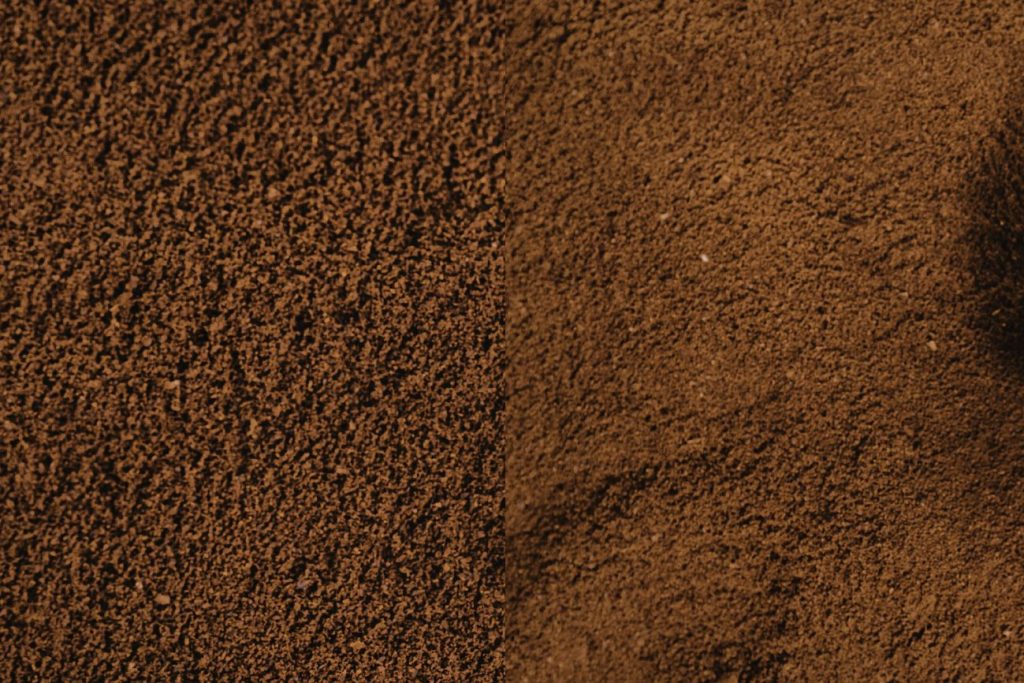
Which coffee grind size is for moka pot and espresso?
The Learning Curve Is Not Equal
Espresso is unforgiving. I say that not to discourage you, but because most beginners underestimate it and end up frustrated.
To pull a consistently good shot, you’re managing all of these simultaneously:
- Grind size (the most critical variable)
- Dose weight (grams of coffee in the basket)
- Distribution and tamp pressure (even, consistent compaction)
- Water temperature (ideal range: 90-96 degrees Celsius)
- Shot time (target: 25-30 seconds for a standard double)
- Extraction yield (the ratio of water out to coffee in)
Change one variable and the whole shot shifts. Too fine a grind and the shot chokes and runs bitter. Too coarse and it gushes through weak and sour. The window for a great shot is genuinely narrow.
The moka pot is more forgiving. You still need to get the grind right and you need moderate heat to avoid scorching. But the range for a good result is much wider. Most people can make decent moka pot coffee within a few attempts. If you’re unsure about grind levels, the Coffee Grind Size Chart by Brew Method explains exactly what grind each brewing style needs.
- Moka pot learning curve: a weekend to get reliable results
- Espresso learning curve: weeks to months before you’re consistently happy
If you enjoy dialing in variables and treating coffee as a craft, espresso is genuinely satisfying. If you want better coffee with minimal fuss, the moka pot rewards simplicity in a way espresso never will.
Who Should Buy What
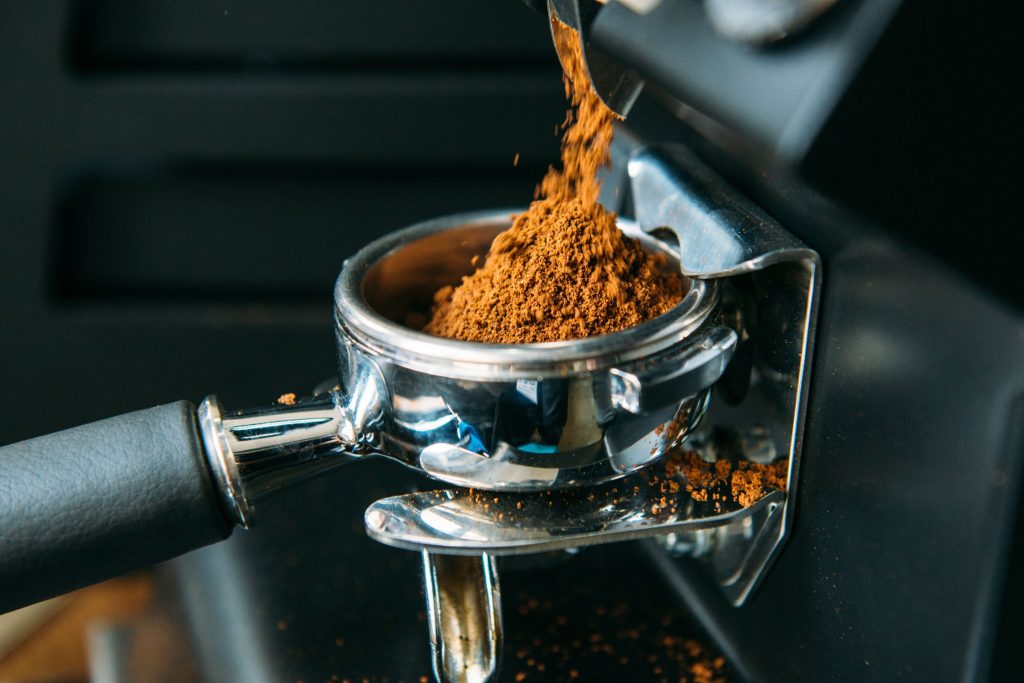
Get an espresso machine if:
- You drink lattes, cappuccinos, or flat whites regularly and want to make them at home
- You enjoy the process of dialing in variables. It interests you, not stresses you
- You have permanent counter space and don’t mind the equipment living there
- You’re prepared to also buy a quality burr grinder from day one
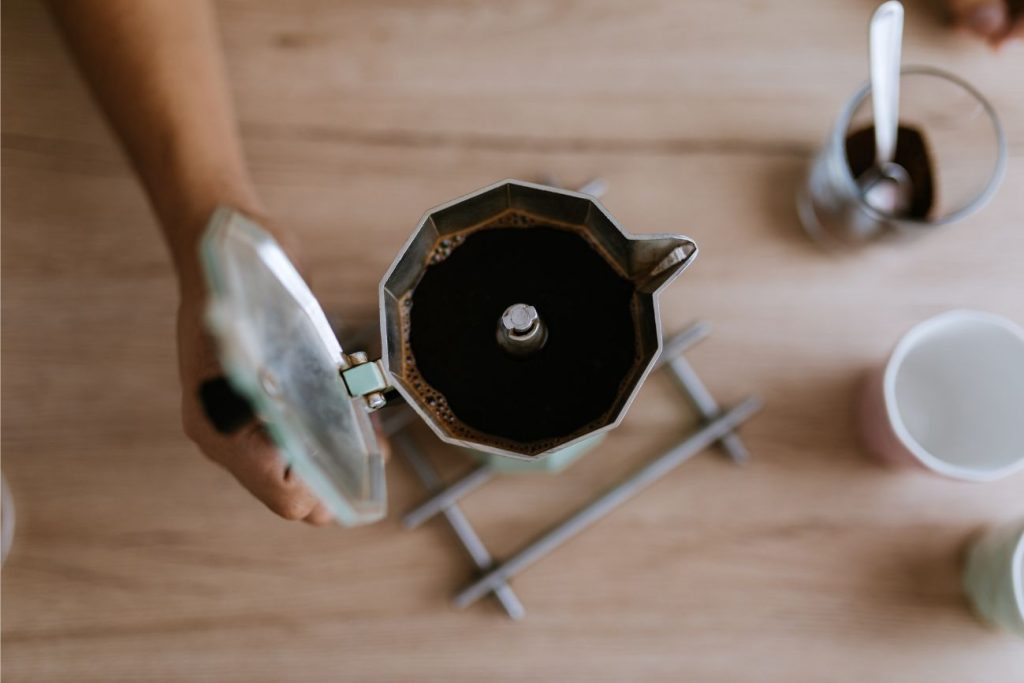
Stick with the moka pot if:
- You want strong, bold black coffee with minimal setup and cleanup
- You move around, rent, or work with limited kitchen space
- Budget is a real constraint and the moka pot is genuinely hard to beat at its price
- You want something that works well on day one, not after weeks of practice
Neither answer is wrong. They’re honest answers to different situations.
How I Actually Use Both
I keep both in rotation, and I have for years.
When I’m traveling or staying somewhere temporarily, the moka pot comes with me. Small. Durable. Works on any stove. Some of the best cups of coffee I’ve ever made came from a $35 Bialetti sitting on a gas burner in a quiet apartment kitchen early in the morning.
When I’m settled at home and want a proper flat white or I’m in the mood to spend twenty minutes dialing in a single origin Ethiopian, that’s when the espresso machine comes out. Pulling a careful shot and steaming milk well is a ritual I still enjoy after all these years.
The moka pot vs espresso question doesn’t have one right answer. It has two honest ones.
What do you actually want to drink every day? And what kind of process do you actually enjoy?
Answer those honestly, and you won’t go wrong.
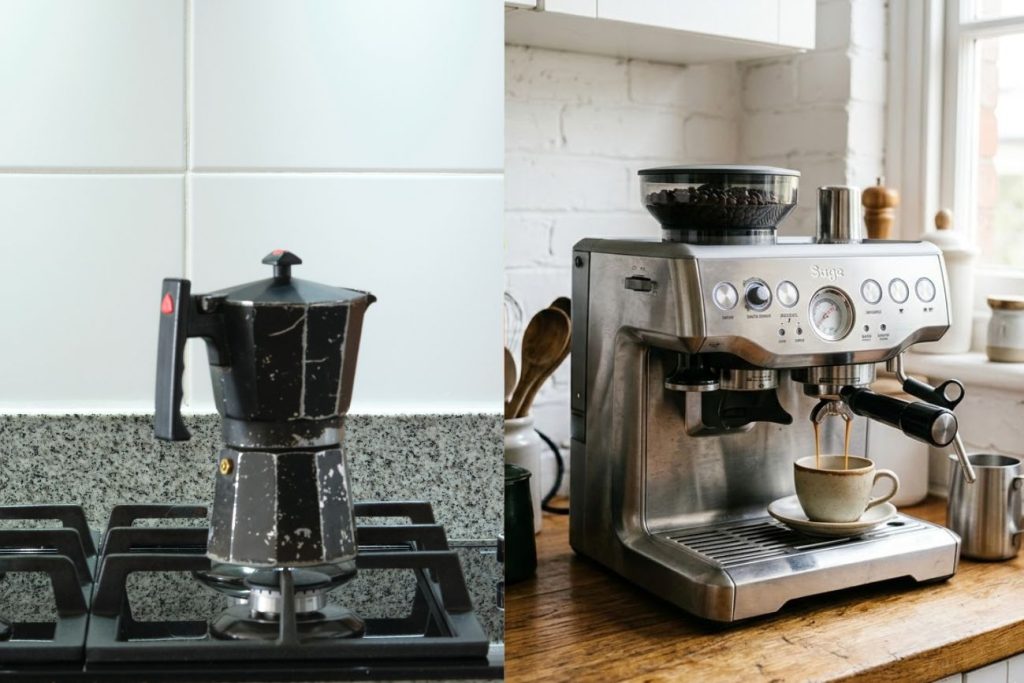
Moka Pot vs Espresso – Frequently Asked Questions
Does a moka pot make real espresso?
No. And the box is lying to you.
Real espresso is brewed at 9 bars of pressure. That pressure emulsifies the coffee oils, creates crema, and produces the thick, syrupy texture you get from a proper shot. A moka pot operates at 1 to 2 bars which is enough to push hot water through the grounds, not enough to replicate any of that.
The result is strong, concentrated coffee. Good coffee, even. But calling it espresso is like calling a fast bike a motorcycle. Similar energy. Completely different machine.
Is moka pot coffee stronger than espresso?
Depends what you mean by “stronger.”
In terms of flavor, moka pot coffee can hit hard – bold, roasty, intense. But in terms of actual concentration, espresso wins. High pressure extracts more dissolved solids in a much smaller volume. A double espresso shot is typically 30-35ml. A moka pot produces more liquid at lower concentration.
Think of it as a spectrum: drip coffee on one end, espresso on the other. Moka pot sits closer to the espresso side, but it’s not at the end.
Can you make lattes with a moka pot?
Yes. And honestly, it works better than people expect.
Brew a full moka pot, pour it into steamed milk, and you’ll get something close enough to a latte that most people won’t complain. The flavor holds up well with milk.
What you won’t get is the body and crema of a proper espresso-based drink. The texture will be slightly thinner. For home brewing without a $500+ machine, though? It’s a genuinely good workaround.
Why does moka pot coffee sometimes taste bitter?
Almost always one of three things: too much heat, too fine a grind, or leaving it on the stove too long.
High heat scorches the coffee as it passes through the grounds. A grind that’s too fine chokes the flow and over-extracts. And once the pot starts sputtering that gurgling sound near the end, pull it off the heat immediately. Everything that comes out after that point tastes burnt.
Read this to prevent the bitter coffee – A Beginner’s Guide to Moka Pot Coffee
Is a moka pot worth buying?
For most home brewers, it’s one of the best $35 to $50 you can spend on coffee. Check this out 6 Best Moka Pots for Every Budget (2026 Guide)
It’s small, durable, works on any stove, and makes genuinely great coffee with almost no learning curve. There’s a reason it’s been in continuous production since 1933, it solves the problem cleanly.
If you’re chasing true espresso or milk drinks with real body, you’ll eventually want a machine. But as a daily driver for strong black coffee? The moka pot is very hard to beat at its price.