Most people buy the wrong gooseneck kettle. Not because they’re careless, but because the marketing is genuinely misleading. Beautiful photos, vague specs, and review sites that repeat the same five features without explaining why any of them matter for how you actually brew at home.
I’ve used enough of these kettles to know which specs are real and which ones just sound good on a product page. Here’s the honest version.
First, Why Your Kettle Shape Is Not Decorative
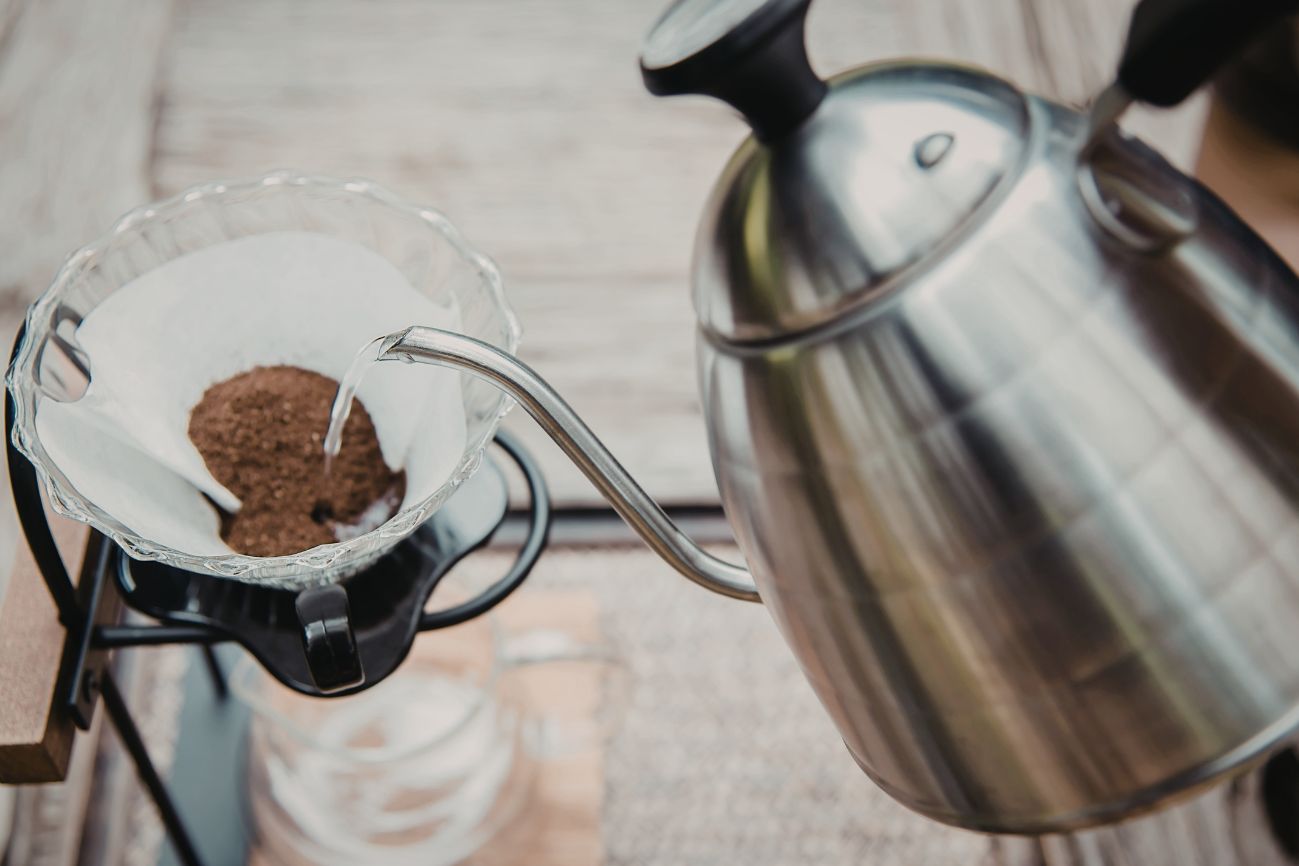
Let’s get this out of the way: a gooseneck spout isn’t aesthetic. It’s functional.
The long, curved neck exists for one reason is control. When you’re brewing pour over, whether that’s a V60, a Chemex, or a Kalita Wave, the way you pour water directly affects extraction. Too fast, and you flood the grounds and get a weak, sour cup. Too slow and uneven, and you get channeling and bitterness.
A regular kettle gives you a fire hose. A gooseneck gives you a paintbrush.
If you’re serious about pour over coffee brewing, the kettle shape is non-negotiable. Everything else on this list is about finding the right gooseneck kettle for your situation.
1. Temperature Control: Non-Negotiable
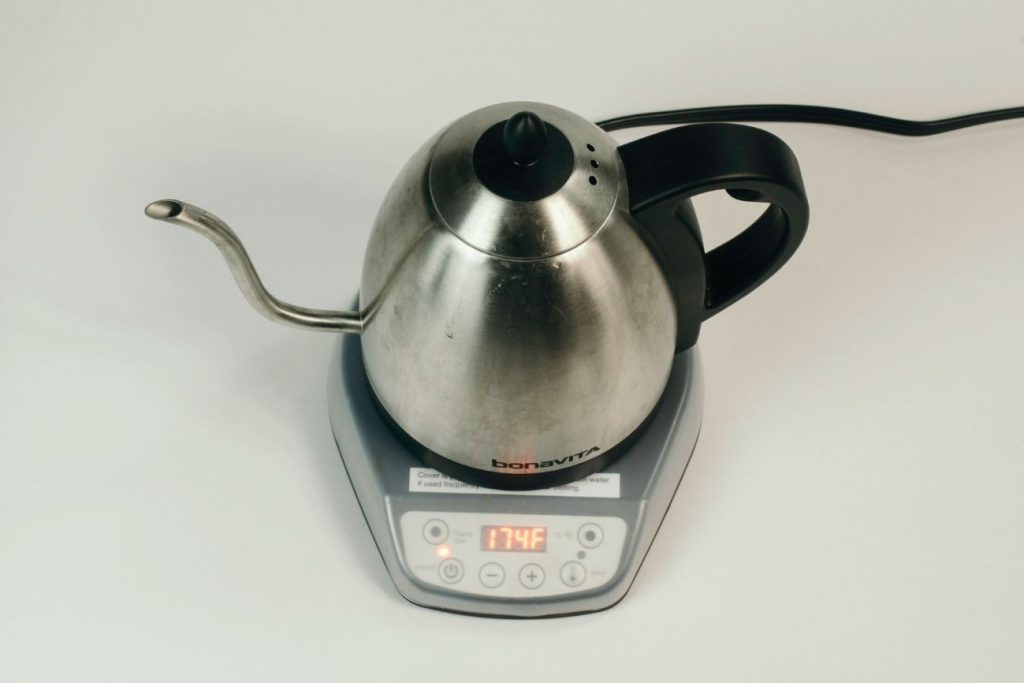
This is where I’ll take a hard stance: if your kettle doesn’t let you set a specific temperature, it’s the wrong kettle.
I know that sounds blunt. But here’s the thing. Different coffees need different water temperatures. Light roasts typically want water around 93-96°C. Darker roasts, 88-91°C. Green tea? 70-75°C. Boiling everything at 100°C is the single most common mistake home brewers make, and it’s costing you flavor every single morning.
What to look for:
- Variable temperature settings (not just “low, medium, high”, it has to be actual degree increments)
- A hold function that keeps water at your set temp for 30-60 minutes
- A clear, readable display, so you shouldn’t need your reading glasses to check the temp
The hold function especially matters if you’re like me and you tend to get distracted before you actually sit down to brew. Nothing worse than water that’s dropped to 75°C because you answered a text.
So what? Precise temperature control is the single biggest flavor upgrade you can make without changing your beans or grinder. It costs nothing extra if you buy the right kettle from the start.
2. Spout Design: Not All Goosenecks Are Equal
Here’s something the marketing copy won’t tell you: some gooseneck spouts are still terrible, even on expensive kettles.
The angle and length of the neck determines how much control you actually have. A neck that’s too short doesn’t give you enough arc to slow the pour. A neck with a wide opening turns your careful drizzle into an aggressive stream the moment you tilt slightly.
What makes a good spout:
- Narrow opening at the tip (ideally 6-9mm diameter)
- Long neck with a moderate upward curve before it drops down – this is what creates resistance and slows the flow
- Balance point near the handle so your wrist doesn’t fatigue halfway through a long bloom phase
The best way to test this? Pour water into a glass and try to hit a coin-sized target. If you can land it consistently, the spout design works.
So what? A bad spout design on an otherwise good kettle still gives you poor pour control. Before you buy, look up a video of someone actually brewing with it, not just the product photos.
3. Capacity: Match It to How You Actually Brew
Most gooseneck kettles come in 600ml, 800ml, or 1 liter sizes.
Here’s my honest take: 1 liter is usually overkill for home brewing, and 600ml is too small if you’re making more than one cup.
For a single V60 or Chemex, you’ll use around 350-450ml of water. For two cups, you might need 700-750ml. An 800ml kettle hits the sweet spot for most home brewers, you have enough water without the extra weight making precision pours harder.
Weight matters more than people think. A full 1-liter kettle is heavy. After a long bloom phase where you’re holding the kettle steady for 30-45 seconds, your wrist will notice.
So what? Don’t default to “bigger is better.” Buy capacity for how you brew, not how you imagine you might brew someday.
4. Heating Speed: Faster Isn’t Always Better, But Slow Is Annoying
Electric gooseneck kettles typically heat at 1000-1500W. The difference in real-world terms? About 2-3 minutes to boil 800ml at 1000W vs 1.5-2 minutes at 1500W.
That might sound like nothing. But if you’re making coffee before work at 6:30am, those minutes feel very long.
What I care about:
- 1200W minimum for any kettle I’m recommending
- A kettle that heats to your set temperature, not to boiling and then cools down — cooling-down kettles are slower in practice and less precise
- No scorching of the heating element, which happens in cheap models and affects taste over time
One thing I see people overlook: the base quality matters. A wobbly, poorly-connected base is annoying every single morning for years. Check reviews specifically for base connection issues before buying.
So what? Heating speed affects your morning routine more than your brew quality. But a kettle that overshoots and then cools is both slow and imprecise. Look for direct-to-temperature heating.
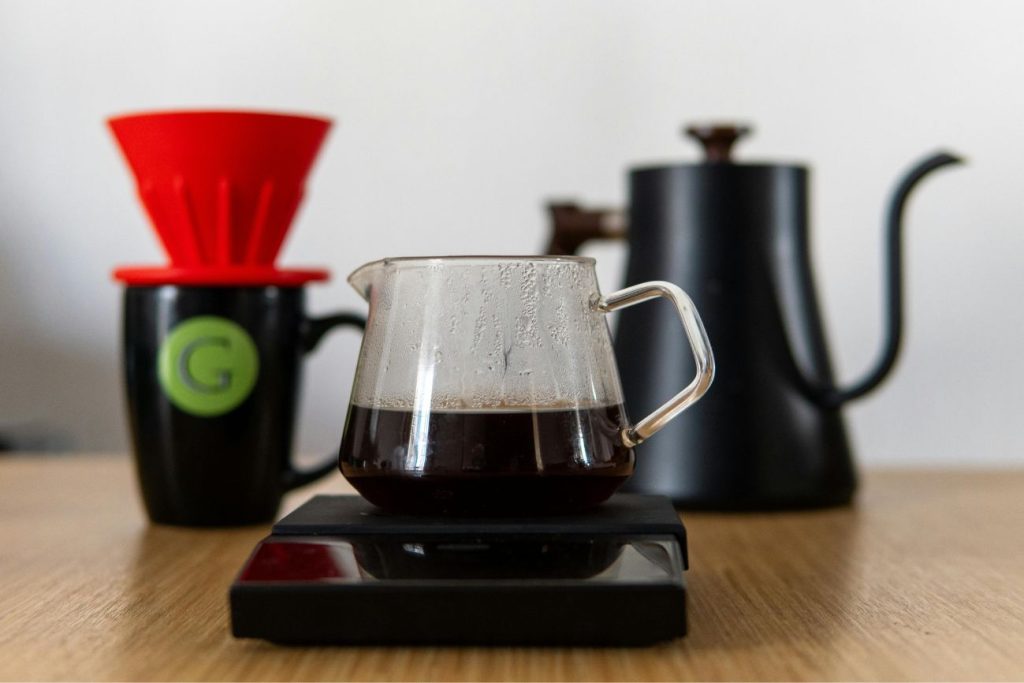
5. Build Quality and Materials: Think Long Term
You’re going to use this kettle every day. Possibly twice a day. That’s 700+ uses a year.
Stainless steel interior is the baseline. Plastic interiors leach flavor and degrade over time. I’ve tasted the difference. You will too if you’re paying attention.
For the exterior: brushed stainless is more forgiving of fingerprints and minor scratches than polished. Matte black looks great for about three weeks and then shows every water spot and fingerprint you’ve ever had.
The handle material matters too. Look for:
- Heat-resistant grip that doesn’t get uncomfortably warm after a minute of hold
- Ergonomic angle – the handle should allow a natural wrist position when pouring at 45 degrees
- A comfortable thumb rest or balance point if you plan to do extended slow pours
I’ve used kettles where the handle design clearly came from someone who never actually made pour over coffee. You can tell within the first brew.
So what? A kettle that’s uncomfortable to hold or builds up mineral residue inside is one you’ll resent using daily. Material quality isn’t luxury, it’s practicality.
6. The Display and Interface: Keep It Simple
This is a mild opinion, but I’ll stand by it: overly complicated interfaces are annoying.
You don’t need a kettle with Bluetooth, app connectivity, or fifteen preset profiles. You need to set a temperature, hit a button, and get on with your morning. That’s it.
What a good interface looks like:
- Clear LED or LCD temperature display
- Simple up/down buttons or a dial for temperature
- One-touch hold function
- An auto-off feature after the hold time expires – this is a safety and electricity issue, not a gimmick
Bluetooth kettles exist. Some people love them. I’ve never needed to preheat my kettle from another room, but if that genuinely fits your routine, go for it. Just don’t pay a $40 premium for it if you won’t use it.
So what? Interface complexity doesn’t improve your coffee. Simplicity means fewer things to break and fewer frustrations at 6am.
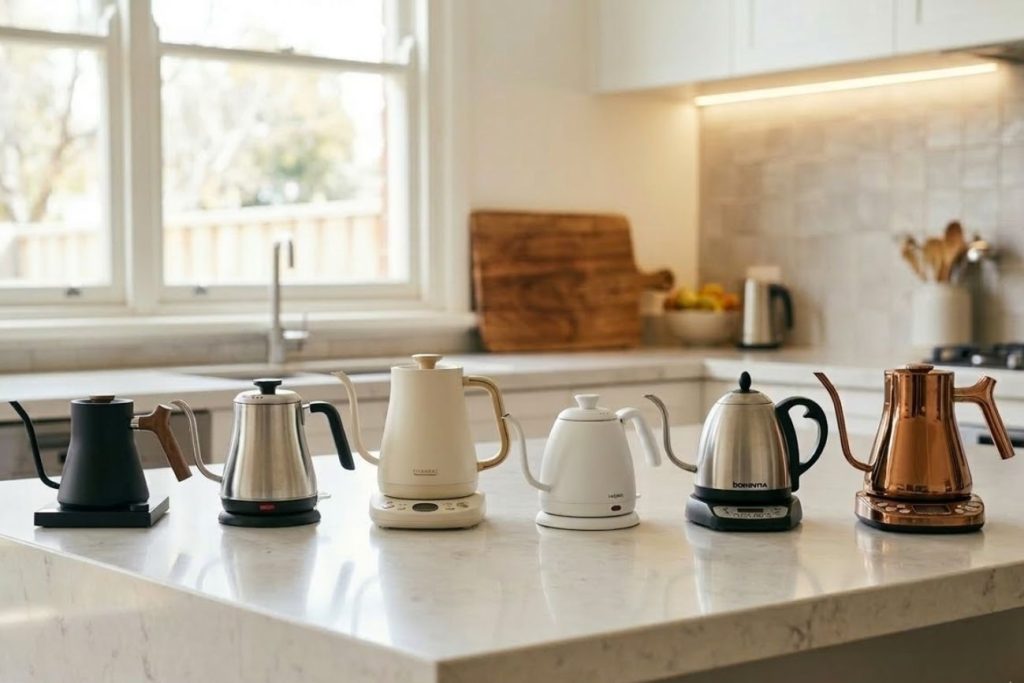
7. Price: Where the Value Actually Is
Here’s the honest bracket breakdown from someone who has bought kettles at every price point:
Under $40: Avoid. The temperature control is unreliable, the spout design is usually poor, and they tend to fail within 18 months. I’ve been here. It’s not worth it.
$40-$80: This is where the real value lives. Brands like Fellow Stagg EKG alternatives, Bonavita, and similar options in this range give you solid temperature control, decent spout design, and stainless interiors. For most home brewers, this is the right zone.
$80-$150: You’re paying for premium build quality, better aesthetics, and often a superior hold function. The Fellow Stagg EKG sits here. It’s genuinely excellent. But it’s not twice as good as a $50 option.
Over $150: Unless you’re running a home coffee setup that rivals a small cafe, you don’t need this. You’re paying for design status at this point.
If you’re figuring out your overall home coffee gear setup, be strategic about where you spend. The kettle matters, but so does your grinder and most people under-invest in the grinder and over-spend on everything else.
So what? The $40-$80 range is where the best value gooseneck kettles live. Spend more if aesthetics matter to you. Don’t spend less and expect precision.
The Short Version, If You’ve Scrolled to the Bottom
You want a gooseneck kettle that does five things well:
- Holds a precise temperature (variable, not preset stages)
- Has a narrow, well-designed spout for flow control
- Fits your actual brewing capacity (800ml is usually right)
- Heats directly to temp rather than boiling and cooling
- Uses stainless steel inside with a comfortable, heat-resistant handle
Everything else is preference. The color. The Bluetooth. The brand name on the side.
If you want to understand more about how water temperature actually affects your brew, read the learn coffee section — specifically how water chemistry and temperature interact with extraction. It’ll make everything above click into place.
You don’t need a perfect kettle. You need the right one for how you actually make coffee. That’s a much shorter list.